Studio method
Process
Cardboard forgives nothing. A wrong cut cannot be filled, so the sequence is fixed and slow — now extended by digital printing, 3D printing, and a personally coded AI agent.
- 01
Salvage
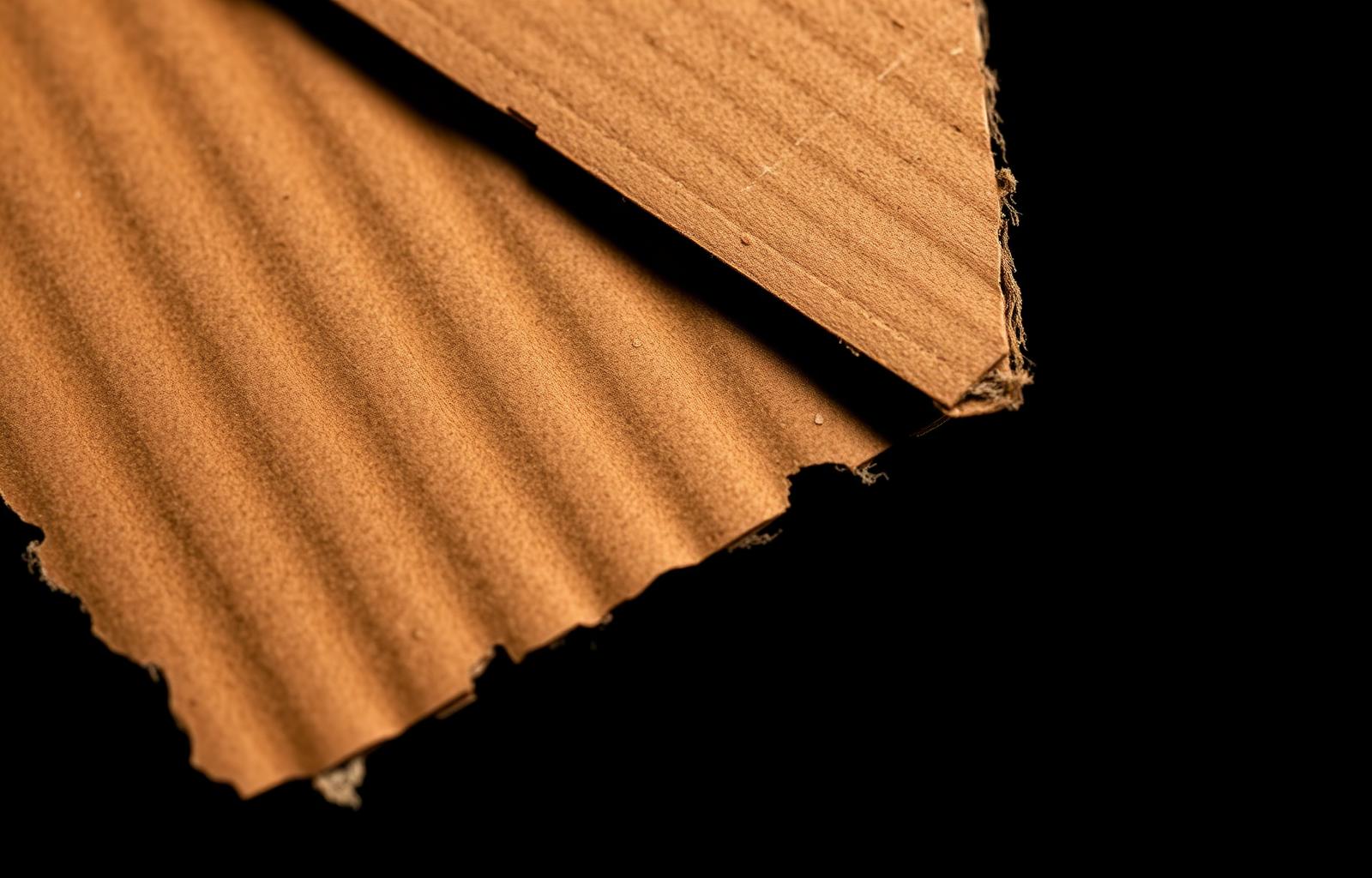
Board is collected from freight terminals and printworks. Print scars, staples and water stains are kept as provenance rather than removed.
- 02
Sectioning
The form is modelled digitally and sliced into contour planes — sometimes two thousand of them — before a single cut is made.
- 03
Hand-cutting
Every plane is cut by scalpel. The blade is changed each forty cuts so the fluting tears rather than compresses.
- 04
Stacking
Layers are laminated with beeswax and hide glue, then carved back into so interior corrugation surfaces at the skin.
- 05
Lighting
The work is finished only when its light is fixed. Angle, colour temperature and throw are specified and travel with the piece.
- 06
Digital Printing
Pigment inks are laid onto kraft and rag papers in archival passes. Prints become both finished editions and source layers inside later sculptural works.
- 07
3D Printing
Fdm and resin forms are produced as armatures, joints and impossible small parts. They serve the cardboard rather than replace it — supporting the hand-cut layers from within.
- 08
Coded AI Agent
A purpose-built agent is trained on the studio's forms and written in the artist's own constraints. It proposes contours, recombines salvaged textures, and is always overruled by the hand at the final cut.